
How to Prepare Your Car for Summer Heat in Inland Southern California
Every summer I get a wave of calls from people stranded on the side of the road. Overheated engine. Dead battery. Blown tire. AC that quit at the worst possible time. Almost all of them were preventable.
Fallbrook, Temecula, and Escondido regularly hit 95 to 105 degrees from June through September. That is not just uncomfortable. It is genuinely hard on your vehicle. Here is what to check before the heat arrives so you are not one of those calls.
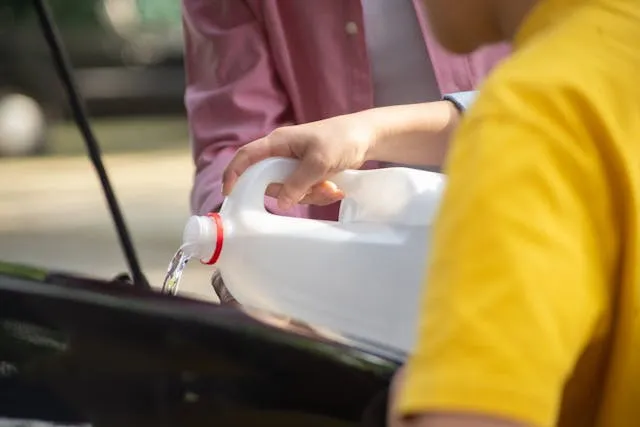
Cooling System: Your #1 Priority
Engine overheating is the most common summer breakdown I respond to. A single overheating event can warp cylinder heads, blow head gaskets, or seize an engine. Repairs that cost thousands of dollars. Prevention is dramatically cheaper.
- Check coolant level and condition: Low coolant is an obvious problem. But old, degraded coolant that's lost its corrosion inhibitors is equally dangerous. Coolant should be flushed every 30,000–50,000 miles.
- Pressure test the system: A cooling system that holds pressure at room temperature may fail under the heat and pressure of a hot summer day. A pressure test reveals leaks before they strand you.
- Inspect hoses and belts: Rubber degrades in heat. Squeeze your radiator hoses. They should feel firm, not soft or mushy. Check the serpentine belt for cracking or glazing.
- Test the thermostat: A thermostat that's stuck closed will cause rapid overheating. A stuck-open thermostat prevents the engine from reaching operating temperature and reduces efficiency.
Air Conditioning: Don't Wait Until It Fails
AC systems that are marginal in spring often fail completely in the first heat wave of summer. If your AC isn't blowing as cold as it used to, or if it takes a long time to cool the cabin, get it serviced now, before the temperature hits 100°F and every shop in the area is backed up with AC jobs.
Common summer AC issues: low refrigerant (often from a slow leak), failing compressor, clogged condenser, or a faulty blend door actuator. Most AC recharges and minor repairs can be done at your location.
Battery: Heat Kills Batteries Faster Than Cold
Most people associate battery failure with cold weather, but heat actually accelerates battery degradation more than cold does. The chemical reactions inside a battery speed up in heat, causing faster plate corrosion and electrolyte loss. If your battery is 3–4 years old, have it load-tested before summer. A battery that passes a basic voltage test can still fail a load test and will leave you stranded on the hottest day of the year.
Tires: Heat + Pressure = Blowout Risk
Tire pressure increases approximately 1 PSI for every 10°F increase in temperature. If your tires are already slightly overinflated, summer heat can push them into the danger zone. More importantly, heat accelerates the degradation of rubber. Tires that look fine in spring may show sidewall cracking by August. Check your tires monthly in summer and inspect the sidewalls carefully for any cracking or bulging.
Fluids: Everything Degrades Faster in Heat
All automotive fluids degrade faster in high heat. Check these before summer: engine oil (and consider switching to a full synthetic if you have not already, it handles heat better), transmission fluid, brake fluid, and power steering fluid. Dark, burnt-smelling fluid is a sign it needs to be changed.
Get It Checked Before Summer Hits
I do a summer prep service that covers all of this at your location: cooling system inspection and pressure test, AC check, battery load test, fluid inspection, and tire check. It takes about an hour and it is a lot cheaper than a tow and a repair in 100-degree heat.
Call or text (760) 468-2854 to schedule. I serve Fallbrook, Temecula, Escondido, and 7 other cities in North San Diego and Southwest Riverside Counties.